Infrared sauna
Infrared sauna cabins for Malang homes and studios
One or two seats, carbon panels, ready to sit in before the kettle would have boiled — and nothing for PLN to sign off on.
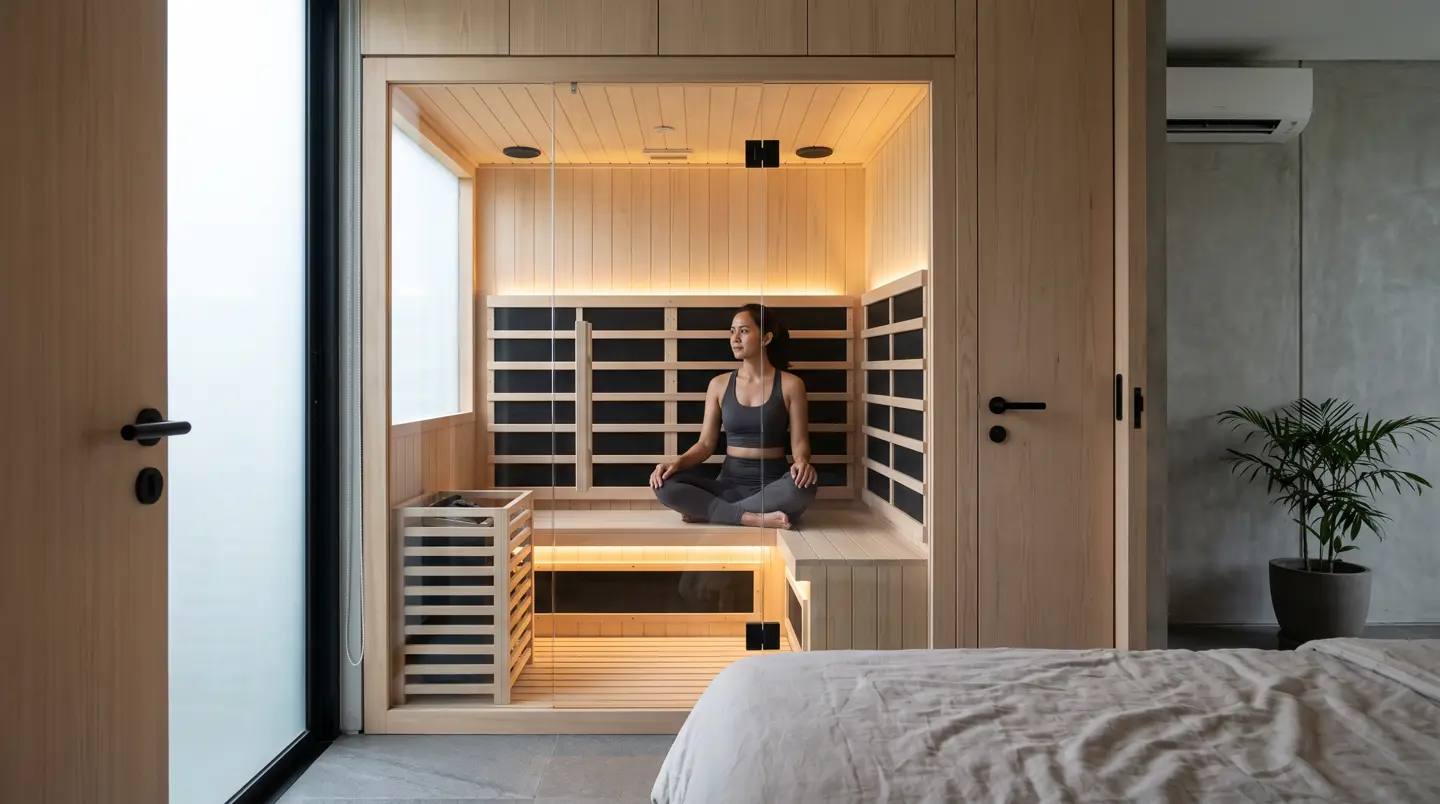
Carbon panels warm the body directly at 45–60 °C rather than heating the air around it. Built for one or two people and drawing 1.7–2.4 kW, it sits happily on 2,200–3,500 VA with nothing to upgrade. As a guide: IDR 30–70 million installed, fitted in 1–2 days, and IDR 100,000–250,000 a month to run.
What infrared actually does differently, and who reaches for it
The panels give off long-wave radiation that skin and muscle take in directly, so the body warms while the air itself sits at a modest 45–60 °C. Ten to fifteen minutes after switching on, the cabin is ready; a session runs twenty-five to forty minutes, and opening the door does not send a wall of hot air into the room behind it.
Here, the building usually decides who buys infrared. Colonial houses around Ijen and Klojen with wiring that has not been touched since the 1930s, flats near Suhat where a heater upgrade means a conversation with the building manager, boarding houses at Dinoyo on a shared supply. Add anyone who simply finds 85 °C too much — older users, people easing back from injury, and small studios that want a recovery option without a plant room attached.
It is also the build that fits into spaces nothing else will. At 1×1 m to 1.5×1.2 m it slots onto a landing, into a dressing room, or the corner of a therapy studio, with no drain, no waterproofing and no column of hot air rising above it to plan around.
Infrared or dry heat: which one is actually right for your house?
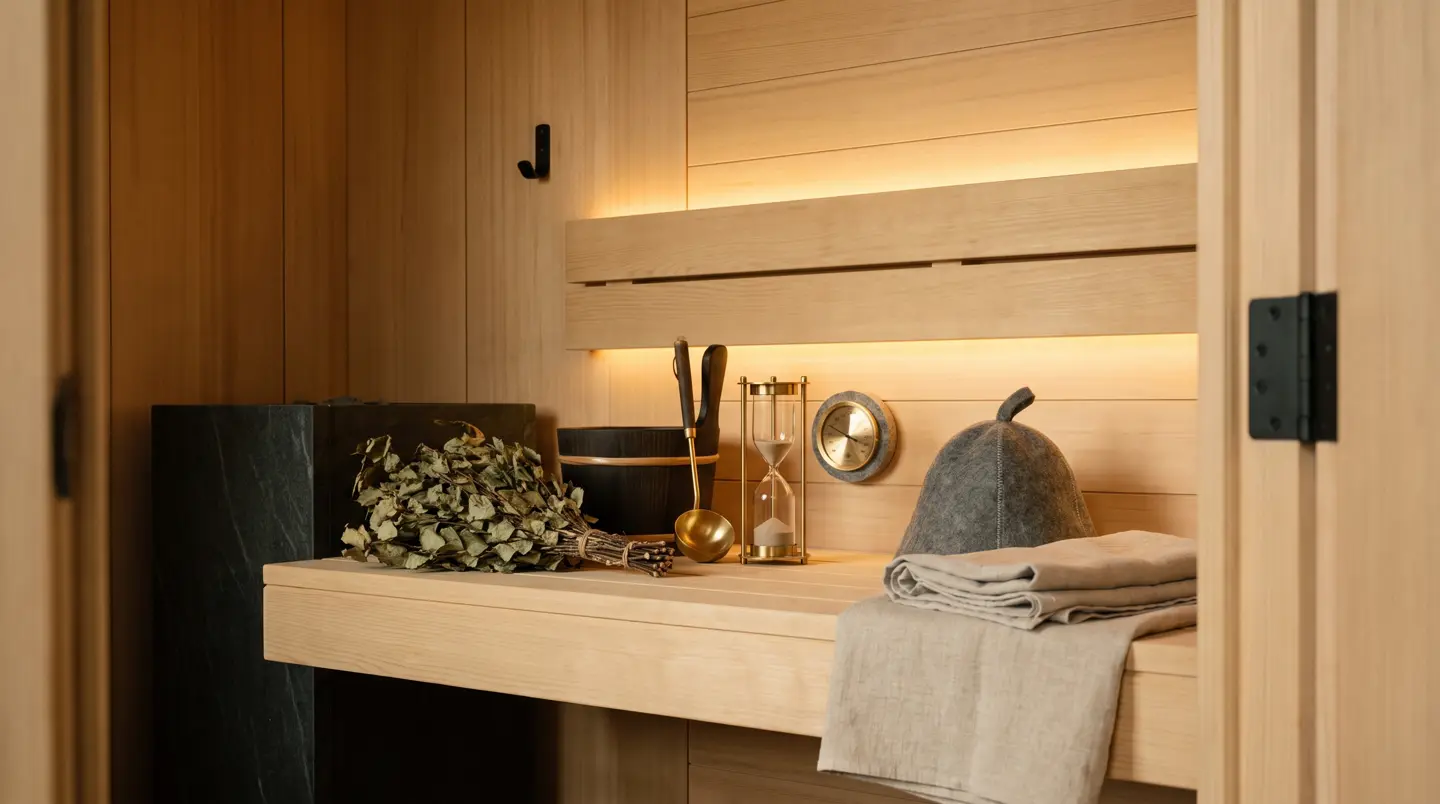
They are solving different problems. A dry cabin is a social, almost ceremonial thing — water on the stones, four people talking, cold air waiting outside. Infrared is quieter and solitary, the heat sits deeper at a lower number, and it costs a fraction to run. Want a room the whole family uses together on a cold Batu evening? Build the dry cabin. Want twenty-five minutes alone after a ride up Pujon? Infrared does that job better.
The savings are not where people expect. IDR 30–70 million overlaps with a two-seat timber cabin at IDR 55–70 million, so the purchase price is not really the story — the saving is in the meter upgrade you never file for, the vent you never cut, and the fortnight of site work you never book. Electricity at IDR 100,000–250,000 a month against IDR 200,000–500,000 then keeps widening that gap every year after.
What it will not give you is the shock of contrast athletes train for. Where recovery is genuinely the goal, most clients pair infrared with an ice bath rather than expecting one to stand in for the other.
Fitted in a day or two, from a Klojen flat to a Batu guesthouse
Fitting infrared is quick precisely because so little needs to happen: a level floor, ten centimetres of clearance behind the cabin, and a dedicated circuit with an ELCB rather than an extension lead run from the nearest socket. Even 2,200 VA copes with the load, though we still test it with the air-conditioning and the water pump both running, so nobody finds the ceiling on a Sunday evening by accident.
Most shells are hemlock or red cedar fitted with standard carbon or full-spectrum panels, and price moves with that choice more than with cabin size. We deliver and fit across Kota Malang, Dau, Karangploso, Singosari, Lawang and Batu; a Klojen flat and a Bumiaji guesthouse both take about the same day and a half.
At handover we run a full session together, set the controller, and explain why the door should stay open between uses — in an older, damper house that one habit matters more than everything else in the manual combined. The full range for every build sits on the price page, and questions go through the contact page.
What an infrared cabin costs
| Build | Guide price (IDR) |
|---|---|
| One seat, hemlock shell, carbon panels | IDR 30–45 million |
| Two seats, hemlock shell, carbon panels | IDR 45–60 million |
| Two seats, cedar shell, full-spectrum panels | IDR 55–70 million |
| Accessory bundle: backrest, lighting, spare controller | IDR 1.5–8 million |
Guide prices in IDR, covering panels, controller, the dedicated circuit and fitting anywhere across Malang Raya. Running cost sits around IDR 100,000–250,000 a month.
Frequently asked questions
Is this safe to run on an old Ijen house's wiring?
Yes, as long as the cabin has its own circuit from the consumer unit with an ELCB — which is how we fit every one. We will not tap into existing sockets on 1930s wiring, however tempting the shortcut looks on the day.
How long does a session run, and what does it cost?
Twenty-five to forty minutes at 45–60 °C. Used three or four times a week, that comes to IDR 100,000–250,000 a month — the cheapest heat we offer, by some distance.
Would this work for a small gym or studio?
For one client at a time, yes — several studios in Lowokwaru already run it that way. For back-to-back use by members all day, a dry cabin with a continuous-duty heater is the better spec.
Will the timber hold up in a damp house?
Hemlock and cedar both cope well, mostly because there is no steam generated inside the cabin in the first place. Leave the door open between sessions, air the room now and then, and the shell will outlast the panels by a wide margin.
Areas covered
The rest of the range
Dry sauna
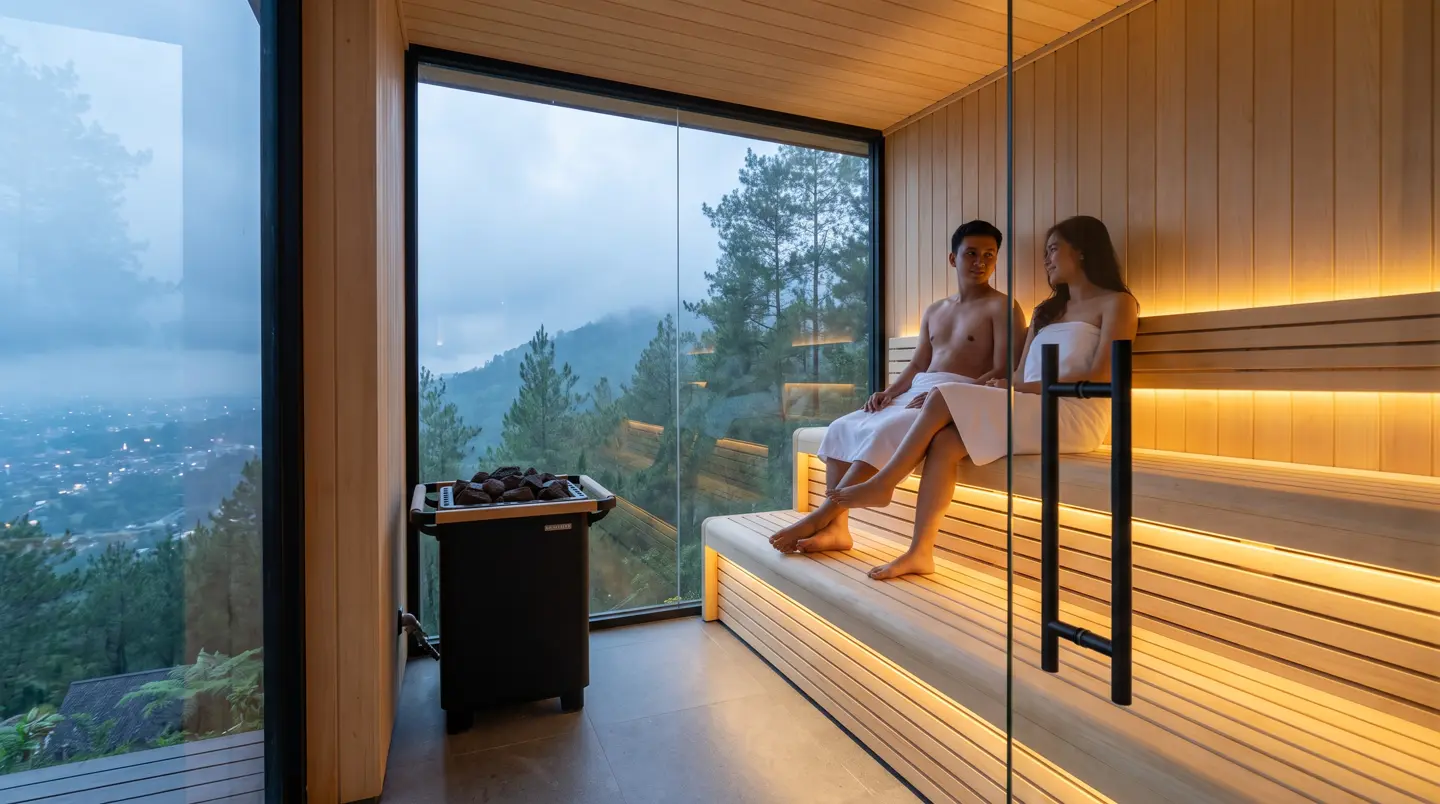
Cedar or thermowood, sized two to eight, holding 70–90 °C in whichever room you can spare.
IDR 60–120 million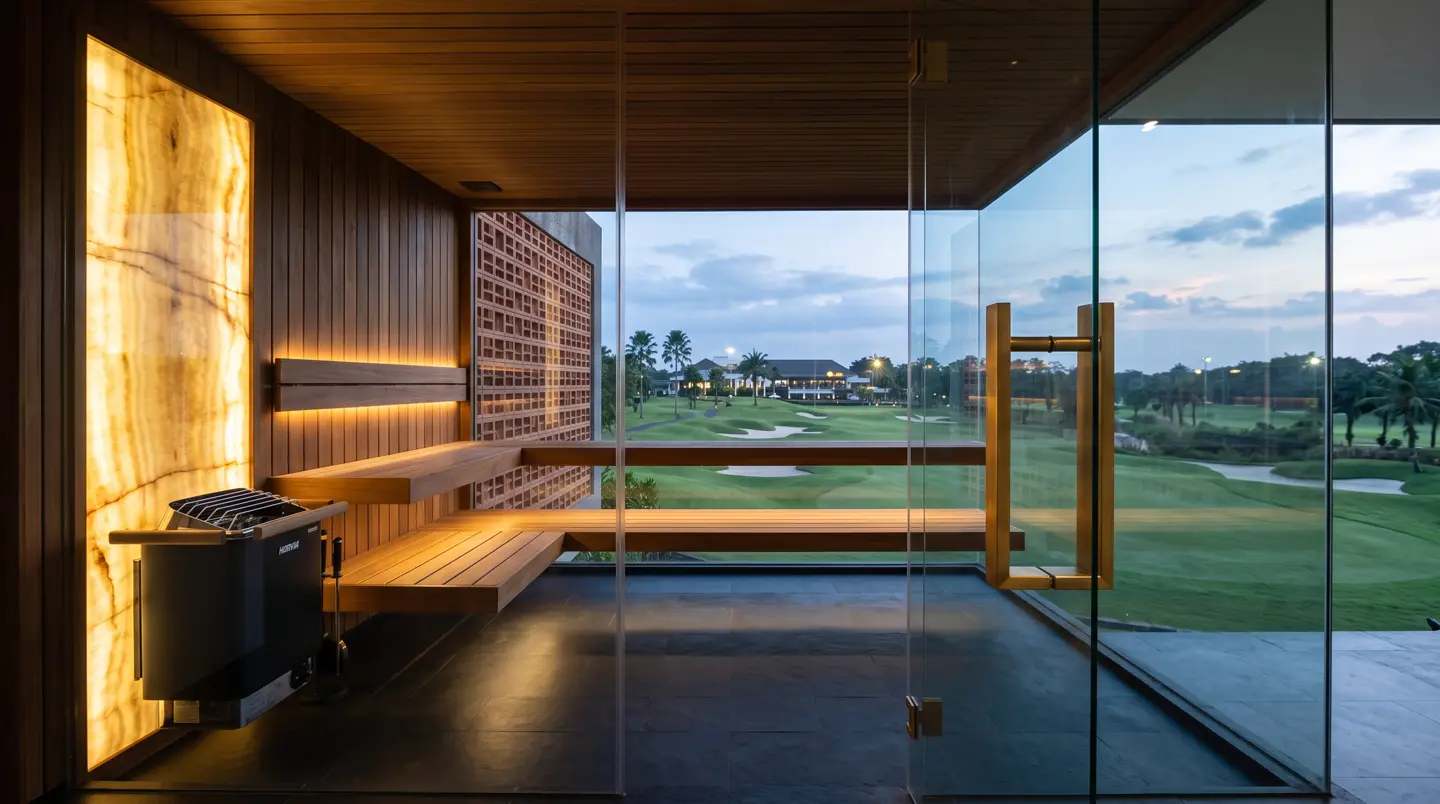
Villa & outdoor sauna
A roofed timber cabin for the terrace, built so a Batu stay photographs like somewhere worth booking again.
IDR 80–150 million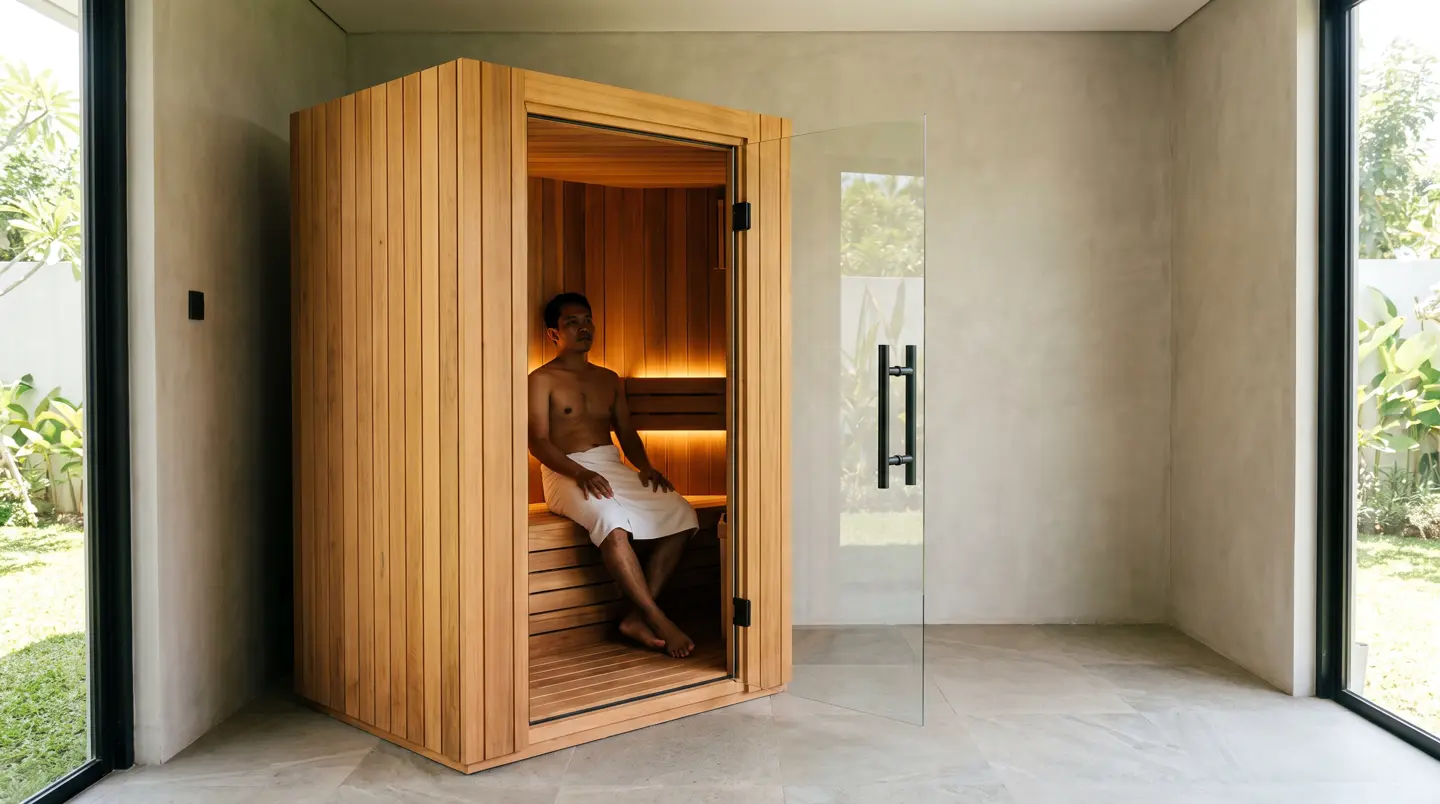
Prefab sauna
Panels that bolt together in a day and hold heat by evening — built for compact houses and homestays.
IDR 15–35 millionGet a figure
Tell us about the room, we will tell you the number
Share your location and what you have in mind, and expect a call the same working day — then a free measure-up in Kota Malang, Batu, Dau, Karangploso or Lawang.
Three photos is all it takes to start
The room or terrace, the PLN meter, and the district you are in — send those over WhatsApp and a ballpark figure comes back before anyone gets in the van.